

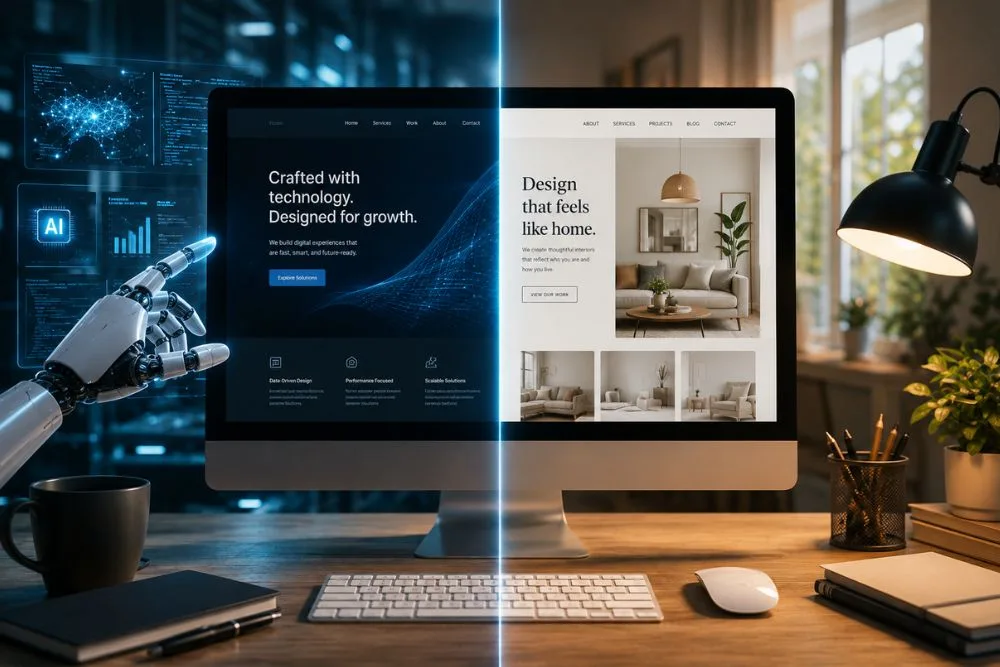
AI-Generated Websites vs Human UX: Which One Truly Drives Conversions?
In the ever-evolving digital landscape, the process of creating engaging and effective websites has seen a transformative shift, thanks to artificial intelligence. AI website design is revolutionizing the way websites are conceptualized and executed, offering unprecedented speed and data-driven insights. However, human-centric UX design, grounded in empathy and social understanding, remains a cornerstone of effective user experience. While AI can improve speed and efficiency, human UX expertise is often what truly drives conversions and long-term user engagement.
The Rise of AI in Website Design
Artificial intelligence has significantly transformed modern website design and development. AI website design tools can craft fully functional websites with minimal human input by using algorithms and machine learning techniques. These tools analyze vast amounts of data to create designs that are both aesthetically pleasing and technically sound, all within a fraction of the time it would take a human designer.
The key driver behind the adoption of AI in web design is its ability to streamline and automate fundamental tasks, such as layout generation, content curation, and even basic customer interactions. AI systems can also analyze user behavior in real time to improve website performance and user experience. For instance, The Grid, an AI-driven design platform, adapts its design decisions according to user behaviors and preferences, continuously enhancing the interface to improve user engagement.
AI’s ability to handle repetitive tasks allows web designers to focus on more strategic, creative endeavors, effectively making it a powerful ally in the design process. It’s not only about efficiency and cost-effectiveness; it’s also about creating the potential for entirely new forms of creative expression and innovation in design.
What Defines Human-Centric User Experience?
While AI provides powerful tools for efficiency and optimization, human-centric user experience (UX) is defined by its focus on empathy, intuition, and understanding the nuanced behaviors of users. A human-centric approach prioritizes the user’s needs and emotions, crafting experiences that resonate on a personal level, often based on qualitative data and social trends that machines might not fully grasp.
Effective UX design considers the entire user journey, striving for a seamless integration of function and storytelling. Accessibility is also a major part of human UX, ensuring websites remain easy to use for all types of users. Emotion plays a crucial role as well; design elements are chosen not just for utility but for how they make users feel — comforted, motivated, or inspired.
Human designers leverage psychological insights to create intuitive interfaces that anticipate user needs. For example, the use of micro-interactions, subtle animations, and personalized content can enhance user satisfaction and encourage engagement. Ultimately, human-centric UX is designed to build trust, improve user experience, and increase conversions.
Comparing Design Elements: AI vs Human Designers
When comparing AI-generated designs to those crafted by human designers, several differences emerge in how design elements are approached and implemented. AI designs tend to reflect their strengths in efficiency and data-driven insights, while human designers bring forward an element of creativity and emotional intelligence.
AI-driven design tools excel in situations where data can inform decisions. They provide:
- Efficiency: AI designs are generated quickly, reducing time-to-market and allowing for rapid iterations based on user feedback.
- Data-Driven Decisions: By analyzing user behavior, AI can optimize layouts and functionalities in real-time to enhance user experience.
- Consistency: Automated processes ensure a consistent application of design elements across various pages and devices.
On the other hand, human designers infuse a level of creativity and empathy that AI tools often lack:
- Creativity: Human designers can create unique experiences that feel more original and brand-focused.
- Emotion and Intuition: Human designers understand cultural contexts and emotional cues, crafting experiences that resonate with specific audiences.
- Adaptability: Designers can respond to nuanced changes in user preferences and market trends, often beyond what data alone can predict.
How Web Design Impacts Conversions?
Your website is often the first impression potential customers have of your brand; therefore, the design significantly impacts conversion rates. A well-designed website can guide users smoothly through the customer journey, reducing friction and encouraging them to complete desired actions.
There are several critical elements where design influences conversions:
- Navigation: Clear and intuitive navigation helps users find what they need quickly, reducing bounce rates and enhancing user satisfaction.
- Responsive Design: Mobile-friendly websites improve accessibility and support better engagement across all devices.
- Content Presentation: Engaging visuals and typography enhance readability and retention, capturing user attention and reinforcing brand messaging.
Beyond these elements, the overall design should facilitate a seamless path to conversion, whether it’s making a purchase, subscribing to a newsletter, or requesting more information. Each step of the journey should be intuitive and aligned with the user’s expectations and motivations.
Combining AI with Human UX
Combining AI technology with human UX expertise can create more effective and conversion-focused websites. AI’s analytical capabilities can support human designers by providing insights that enrich the creative process, allowing for more informed and targeted design decisions.
An optimal strategy might employ AI to handle data collection and pattern recognition, freeing human designers to focus on aspects of the design that require empathy and creativity. This combination allows for:
- Enhanced Creativity: Designers can explore innovative design solutions informed by comprehensive data insights without being bogged down by monotonous tasks.
- Personalization: AI can analyze visitor behavior to support more personalized user experiences.
- Scalability: AI can manage large-scale updates and optimizations, while human designers ensure that the core brand identity and user connection remain intact.
Conclusion
In the debate between AI-generated websites and human-centric UX, the answer isn’t about choosing one over the other, but rather how to integrate both effectively. As you seek to optimize conversions, embrace the potential of AI to enhance efficiency and data-driven design, while relying on human designers for creativity, empathy, and nuanced understanding of user behaviors. A balanced approach helps businesses create websites that are both technically efficient and emotionally engaging for users.
Ultimately, the most effective web design strategy is one that seamlessly combines the strengths of AI and human ingenuity, ensuring that your website not only meets functional needs but also engages users on a deeper level, driving conversions and fostering long-term loyalty.
Frequently Asked Questions
1. What are AI-generated websites?
AI-generated websites are websites created using artificial intelligence tools that automate design, layout creation, content suggestions, and basic optimization processes.
2. Can AI-generated websites improve conversions?
AI can improve website speed, personalization, and data-driven optimization, which may help increase conversions. However, human UX design often plays a bigger role in building trust and emotional engagement.
3. Why is human-centric UX important for conversions?
Human-centric UX focuses on empathy, usability, emotional connection, and intuitive design, helping users feel more comfortable and increasing the likelihood of conversions.
4. What are the advantages of AI in website design?
AI helps automate repetitive tasks, speed up website creation, analyze user behavior, and provide data-driven design recommendations.
5. Can AI fully replace human UX designers?
AI can support website design and optimization, but human designers are still important for creativity, emotional understanding, branding, and advanced user experience strategies.