

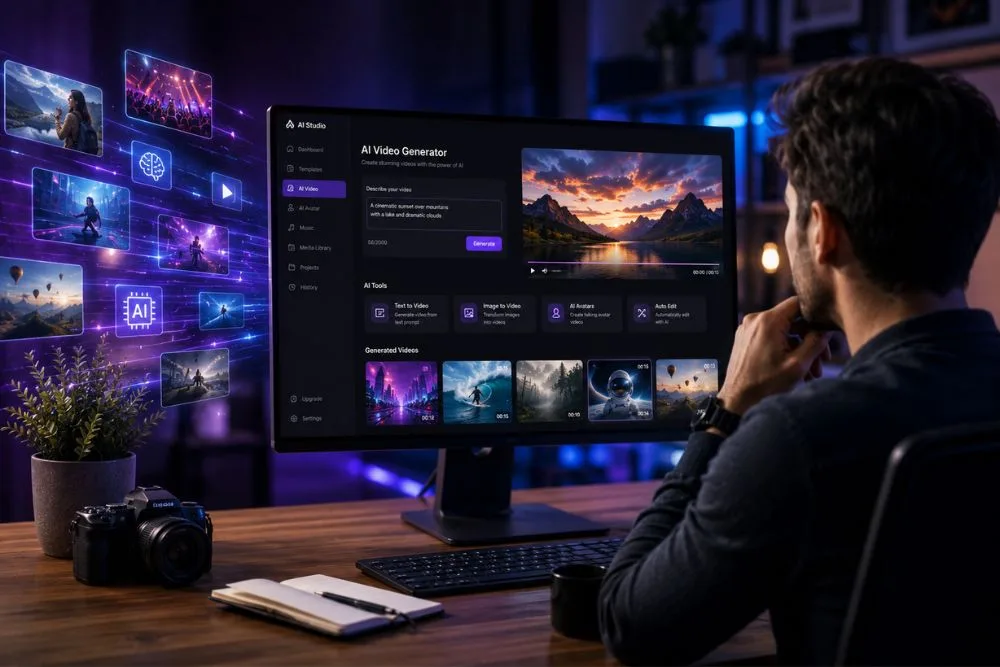
AI Video Editing Is Becoming the New Social Media Standard
Artificial intelligence (AI) is transforming the way people create and interact with social media content. As a content creator or marketer, you’ve likely noticed the sweeping transformations brought about by AI technologies, particularly in video editing. This advancement is not just a trend; it’s becoming the new standard. Content creators, influencers, and brands are increasingly using AI video editing to improve efficiency, boost engagement, and maintain a consistent online presence. In this article, we’ll explore how AI is redefining social media, the benefits it offers, the steps to integrate it into your strategy, and the ethical considerations that come with it.
How AI Is Changing Social Media Content?
The impact of AI on social media content is profound and multi-faceted. Beyond faster editing, AI helps create more personalized and engaging content for audiences. Here’s how AI is influencing content creation and distribution in the social media realm.
Firstly, AI algorithms are used to analyze user behavior, allowing platforms to provide personalized content recommendations. This helps creators produce videos that better connect with their target audiences and improve engagement. AI identifies patterns and preferences from massive datasets, allowing content to be served dynamically.
AI-powered tools like automatic video editing software have made it possible for you to produce high-quality videos with minimal effort. These tools can automate processes such as cutting, filtering, and even suggesting optimal scenes for engagement. AI can also generate optimized thumbnails and titles based on audience behavior and performance data.
Moreover, AI is transforming how social media platforms manage content moderation. Algorithms are employed to detect and flag inappropriate content, ensuring a safer online environment. Machine learning helps platforms evaluate text and visuals more efficiently for faster moderation.
Benefits of AI Video Editing for Creators and Audiences
Leveraging AI in video editing has significant benefits for both content creators like you and the audiences you cater to. Understanding these benefits can help you maximize your social media strategy.
For content creators, AI video editing tools offer:
- Time Efficiency: AI automates repetitive editing tasks, allowing creators to focus more on creativity and storytelling.
- Cost Reduction: With AI, expensive production tools and extensive editing manpower are less necessary, significantly lowering the cost barrier for high-quality content creation.
- Enhanced Quality: AI tools use algorithms to optimize video quality, applying filters, correcting colors, and ensuring the best output, which is crucial for capturing audience attention.
For audiences, the benefits include:
- Personalization: AI curated feeds ensure that viewers receive content tailored to their interests, enhancing user satisfaction and engagement.
- Improved Viewing Experience: Smoothly edited, high-quality videos create a more engaging and enjoyable experience for viewers.
The symbiotic relationship between creators’ efficiencies and audience satisfaction underscores the foundational value of AI video editing in social media.
How to Integrate AI Video Editing Into Your Content Strategy?
Integrating AI video editing into your content strategy requires planning and adaptability. Here are some key steps to help you incorporate AI into your workflow effectively.
Firstly, identify your goals and needs. Determine what aspects of video production you need assistance with, be it editing speed, creative enhancement, or data-driven insights. Align these needs with AI tools that offer specialized capabilities.
After defining your goals, research and select suitable AI video editing software. Options such as Magisto, Animoto, or Adobe Premiere Pro with AI integrations provide various features suitable for different creative processes.
Next, familiarize yourself with the chosen tools. Spend time exploring the features and capabilities of each platform. Many platforms offer tutorials and community forums that can help you gain proficiency.
Additionally, continually analyze the performance of AI-edited videos. Use analytics tools to track engagement metrics such as view durations, click rates, and audience demographics. Evaluate these metrics to understand effectiveness and adjust strategies accordingly.
Incorporate feedback from your audience to refine your content strategy. AI can help curate feedback but understanding audience sentiment holistically will augment your strategic planning.
Ethical Concerns in AI Video Editing
While AI video editing brings numerous advantages, it also raises several ethical concerns that shouldn’t be overlooked. Addressing these challenges is essential for responsible AI adoption.
One of the main concerns is the potential for deepfakes, where AI manipulates videos to produce fake but realistic-looking content. This poses risks for misinformation and harm, requiring vigilance in how AI tools are applied.
Privacy is another concern, especially when personal data is used to train AI systems. Maintaining transparency with how data is collected and used becomes imperative to preserve audience trust.
AI-driven editing can also amplify biases encoded within algorithms. If unchecked, these biases may skew content representation and affect audience perception, leading to ethical dilemmas and public backlash.
Another aspect to consider is content authenticity. There’s a debate about the reduced human element in AI-edited content and how it might alter the authenticity of storytelling. Maintaining a balance between AI automation and human creativity remains important.
To address these concerns, it’s advisable to establish ethical guidelines for AI use, incorporating public feedback, and being transparent about AI’s role in content production.
The Future of AI in Social Media
AI is expected to play an even larger role in the future of social media. As you look towards the future, several trends are likely to shape how AI continues to influence the industry.
You can expect more sophisticated AI tools that offer real-time customization and augmented reality integration, improving interactivity and immersion in social media platforms. AI-driven insights will become more precise, allowing for hyper-personalized content that caters to individual user preferences to an unprecedented level.
AI’s role in automating and optimizing advertising is also set to expand. Personalized ad placements and dynamic content adjustments based on viewer behavior will become the norm, providing brands with enhanced targeting capabilities.
Additionally, AI’s evolution will likely encourage new forms of content creation, including 3D video and virtual content, potentially opening entirely new realms of engagement.
At the same time, challenges related to ethics, regulations, and transparency will remain important considerations. Balancing technological advancements with ethical governance will define how beneficial AI can truly be for the social media ecosystem.
In conclusion, AI video editing is undeniably becoming the new social media standard. By radically transforming how content is created, enhanced, and distributed, AI offers you unprecedented opportunities for innovation and engagement. While it presents certain ethical challenges, thoughtful integration and governance can mitigate these risks. As AI continues to evolve, you have the power and responsibility to harness its potential to enrich both the creator’s and audience’s experience in the ever-dynamic world of social media.
Frequently Asked Questions
1. What is AI video editing?
AI video editing uses artificial intelligence to automate and improve video production tasks such as trimming clips, adding effects, generating captions, and enhancing video quality.
2. How does AI help social media content creators?
AI helps creators save time, improve video quality, analyze audience behavior, and create more engaging content with less manual effort.
3. Can AI video editing improve audience engagement?
Yes, AI can optimize video elements like thumbnails, captions, and editing styles based on audience preferences, which can help increase engagement rates.
4. Are AI video editing tools expensive?
Many AI video editing tools offer affordable plans and even free versions, making them accessible for beginners, influencers, and businesses of different sizes.
5. What are the risks of AI-generated video content?
Some risks include deepfakes, misinformation, privacy concerns, and potential bias in AI-generated content. Responsible usage and transparency are important.